
Prenatal Massage in NW Portland
Therapeutic care is adapted for every trimester. 20+ years of clinical practice, gentle hands, safe positioning.
Pregnancy is a lot of work for the body
Pregnancy places significant and constantly changing demands on the body. As your center of gravity shifts, as your weight increases, as ligaments soften and joints adjust to make room for what is coming, the physical experience of being pregnant can become uncomfortable in ways that are difficult to address through rest, stretching, or sleep alone.
Prenatal massage offers targeted, adapted support for exactly those discomforts. It is not a modified spa treatment. It is genuine therapeutic care for a body doing an enormous amount of physical work, in a position that respects what is changing and tools that adapt as your pregnancy progresses.
After 22 years of clinical practice, I bring the same blend of intuitive listening and clinical depth to my prenatal sessions that I bring to every session at Alacrity Massage & Wellness. The work is tailored. Nothing is scripted. The session is built around what your body, this pregnancy, this week, is asking for.
How a Prenatal Session Works
Every prenatal session begins with a conversation. How are you feeling this week? What has shifted since last time? Where are you carrying tension? What positioning has felt good lately, and what has not. You know your body and this pregnancy better than anyone, and your input shapes the entire session.
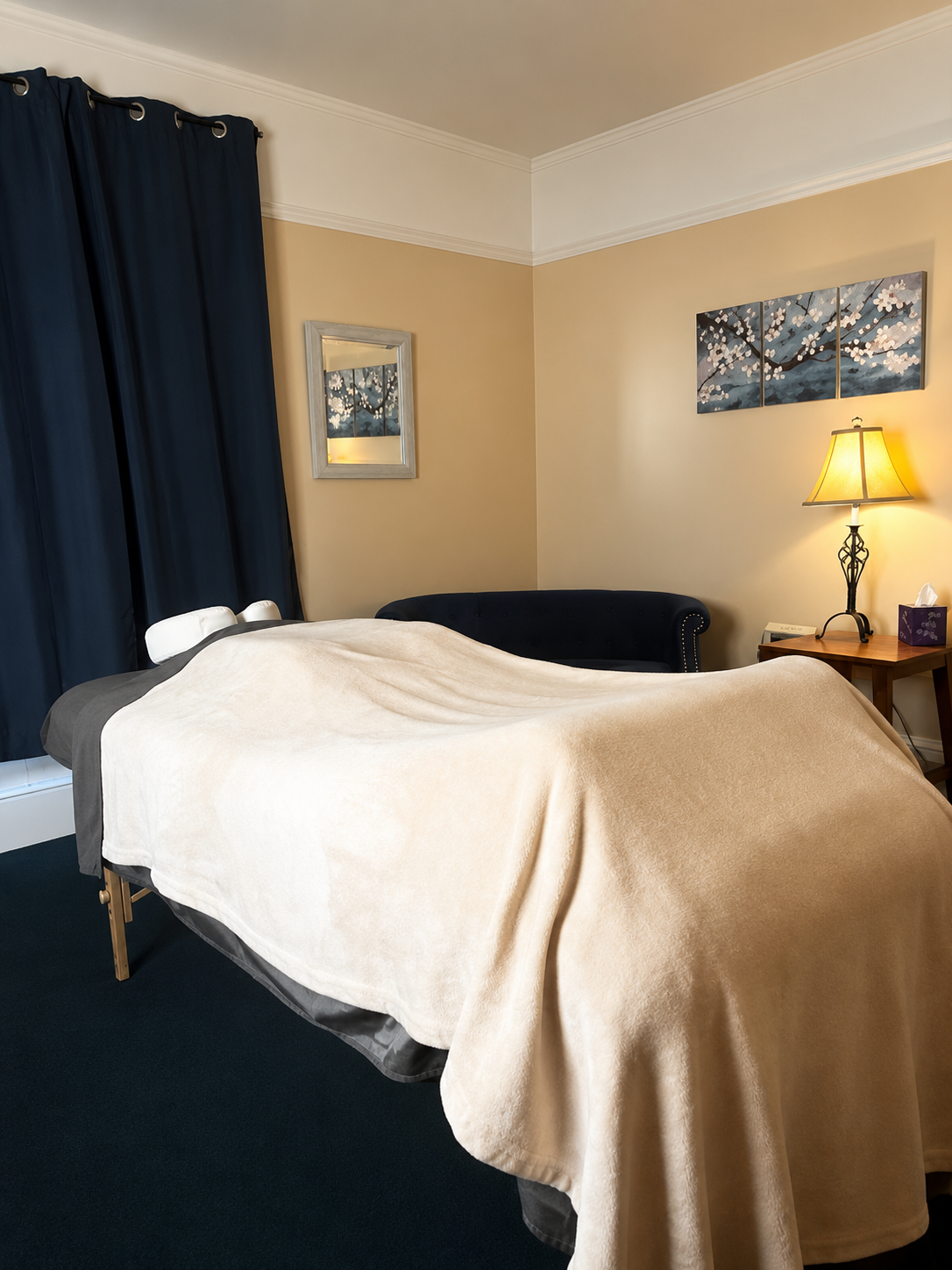
From there, we move to the table. Positioning is one of the most important parts of prenatal work, and the right setup changes as your pregnancy progresses. In early pregnancy, side-lying with bolsters often works well. In later pregnancy, a fully supported side-lying position with pillows under the belly, between the knees, and behind the back creates a position that is both safe and genuinely comfortable. I take time to get the setup right, because the wrong position can take a perfectly good massage and make it stressful instead of restful.
During the session, your feedback continues to shape the work. If something feels off, if you need to shift, if a position is no longer comfortable, just say so. We adjust. The point is not to power through anything. The point is to give your body what it actually needs this hour.
How the Work Adapts Across Pregnancy
First Trimester
I generally recommend waiting until the second trimester before starting prenatal massage. If you are an existing client of mine and we want to continue care during the first trimester, that is a conversation worth having one-on-one, with your physician's input if you have specific concerns. The recommendation is not because massage is unsafe in the first trimester. It is because most miscarriages happen in this window, and many practitioners (myself included) prefer to wait until pregnancy is more established before beginning new bodywork relationships.
Second Trimester
Often considered the sweet spot for prenatal massage. Energy returns, the early nausea typically passes, and the body begins changing in ways that benefit from regular bodywork. Side-lying positioning becomes the default. Common focus areas in this trimester: lower back, hips, shoulders, and the upper back, as posture begins to shift to accommodate weight gain. Many clients begin coming in monthly during this window.
Third Trimester
The trimester where bodywork often makes the biggest difference. Lower back, hips, and pelvic pressure are typically at their most demanding. Sciatic discomfort, swelling in the legs and feet, and difficulty sleeping all tend to peak. Sessions often shift toward shorter time on the table with extra time spent on positioning, support, and pacing. I see clients up to and through their due dates if they are still feeling up to coming in. Many find that a session at week 38 or 39 is one of the most welcome things they do during the entire pregnancy.
What Prenatal Massage Helps With
The physical experience of pregnancy varies enormously from person to person and from week to week. The areas clients most often want addressed include:
Lower back tension and sciatic discomfort are often the most common complaints as the second and third trimesters progress
Hip tightness and pelvic pressure as the body prepares to make room
Upper back and shoulder strain from changes in posture and the extra weight
Neck tension and headaches from postural changes and sleep disruption
Swelling in the lower legs, ankles, and feet, particularly in later pregnancy
Carpal tunnel symptoms in the hands and wrists, which can flare during pregnancy
Hip and glute tightness from the body's biomechanical adjustments
Fatigue and the deeper exhaustion of carrying a pregnancy, where a session focused on nervous system support can be more useful than direct work on a sore area.
If your situation is something specific, perhaps recovery from a fall, working through pelvic discomfort, or processing significant emotional or physical stress, that is worth a conversation before booking. I am happy to talk through whether prenatal massage is the right fit for what you are dealing with, and if so, how to make the session most useful for you.
Two ways your body can be supported
-
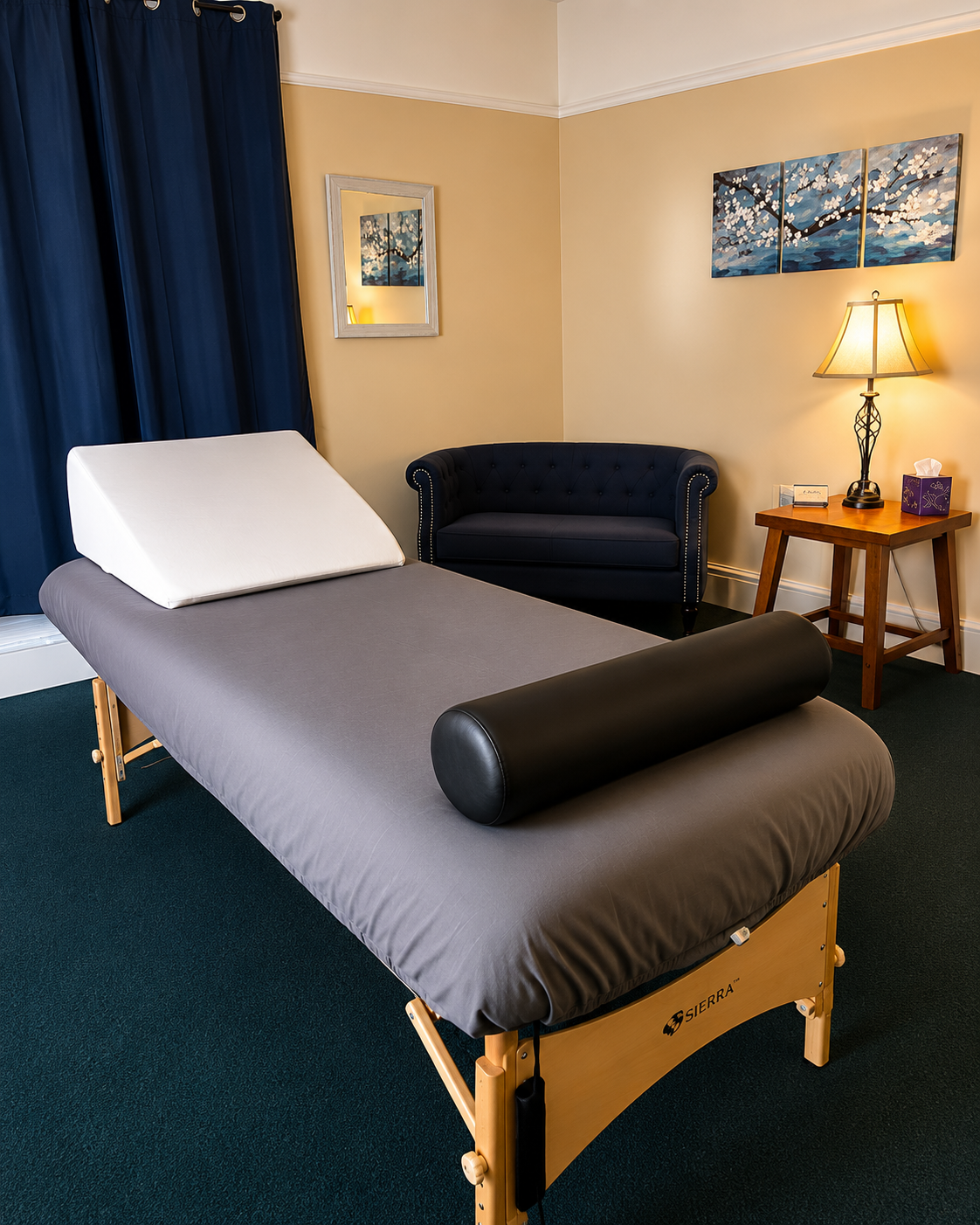
How positioning works in your session
Comfort during pregnancy massage matters more than most people realize, because the position you are in shapes whether your nervous system can settle and the work can actually land.
At Alacrity, two positioning options are available, and we choose based on what feels right to you and what your body is comfortable with that day.
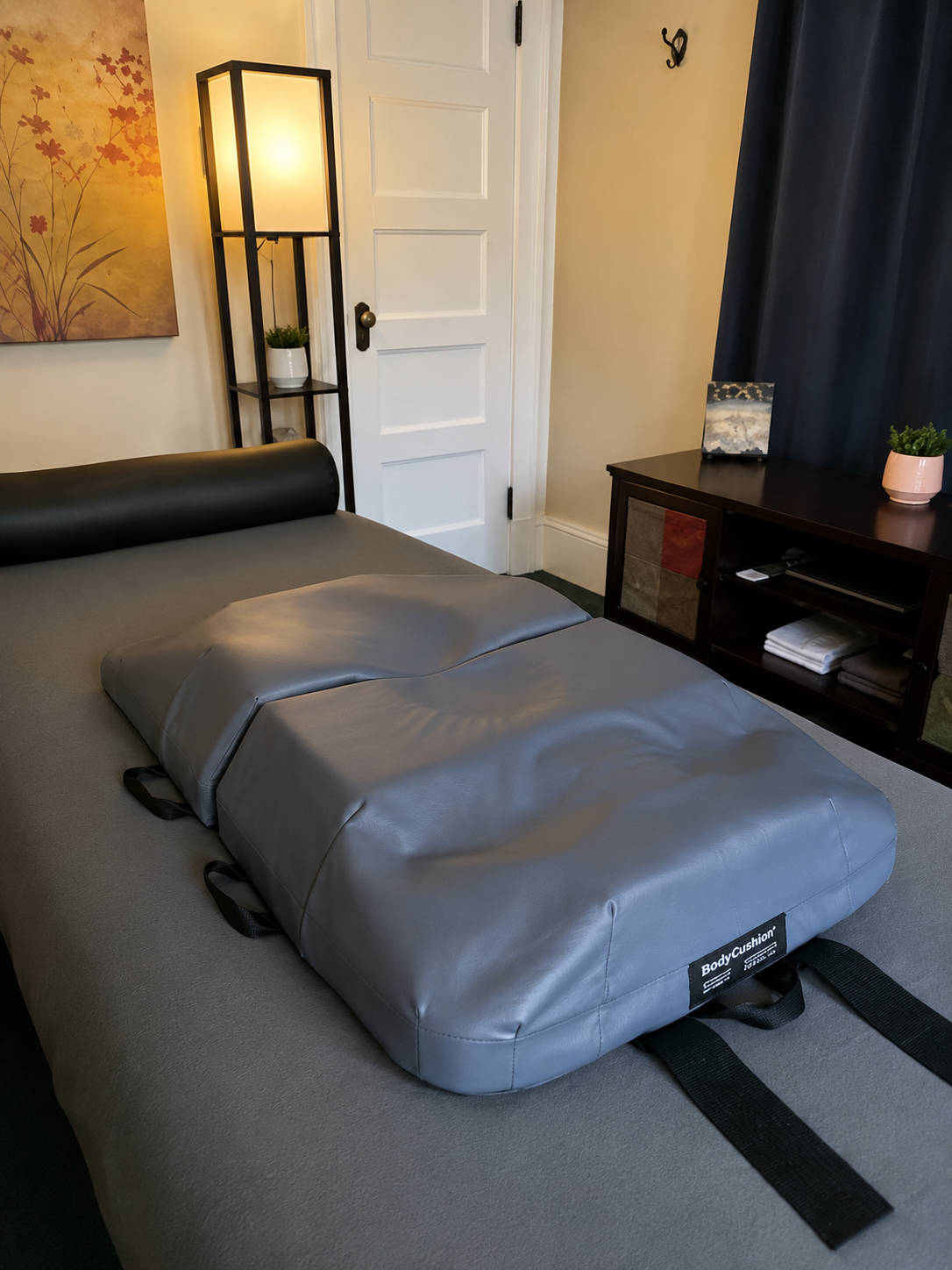
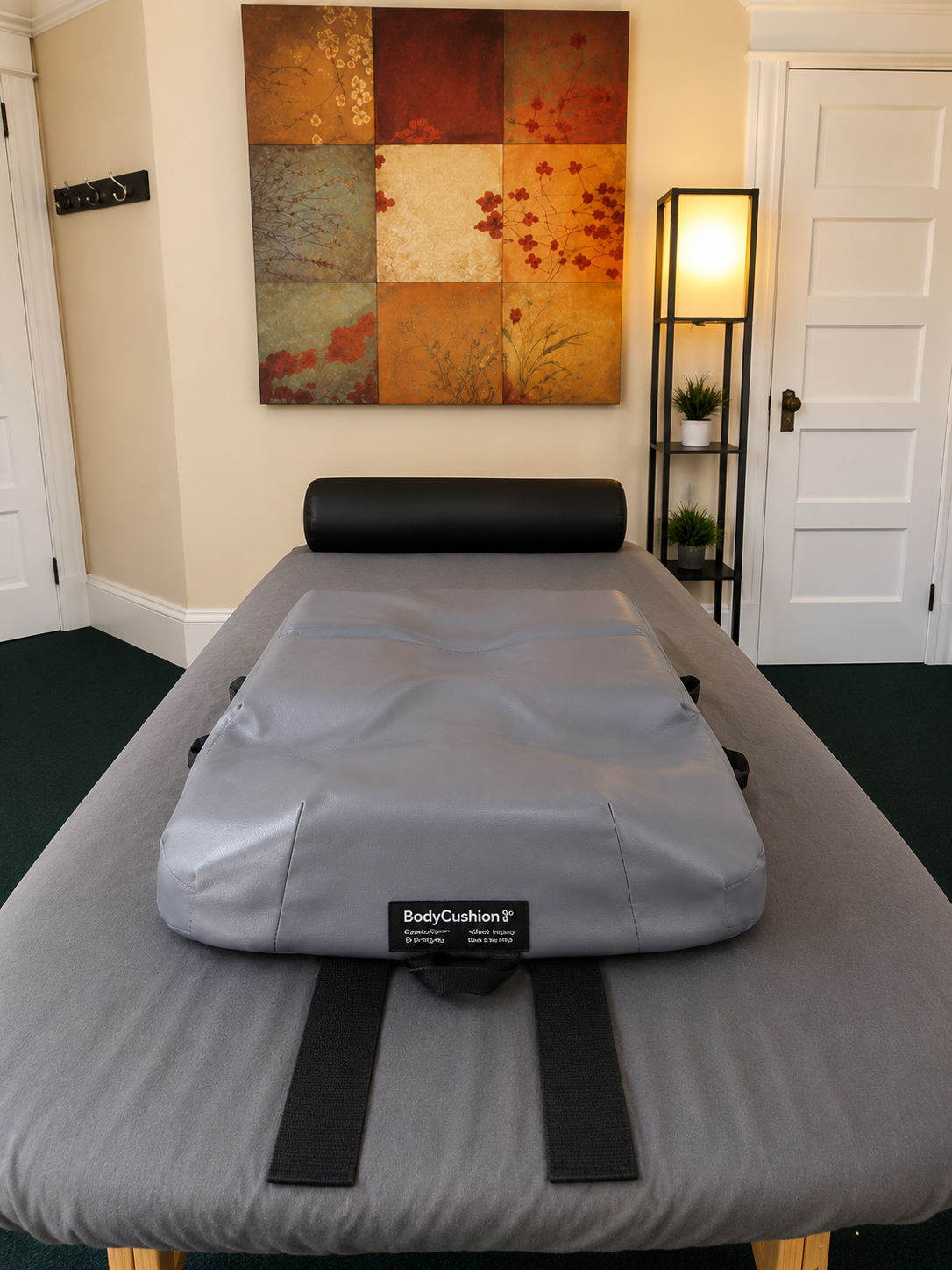
The body cushion system. A specialized cushioning setup designed specifically for prenatal work that allows you to lie face down comfortably and safely throughout your pregnancy. Many clients deeply appreciate this option because being face down is something they miss as their pregnancy progresses. The system is set up to fully support the belly and protect the lower back. Not every pregnancy is right for face-down work, and we discuss what makes sense for you before each session.
Sideline positioning. The traditional approach involves bolsters and pillows arranged to fully support your body in a side-lying position. This is the right choice for some pregnancies and some preferences, and it allows for deep, attentive work without any pressure on the belly or lower back.
-
About Christina's prenatal work
Pregnancy massage at Alacrity is built around what your body actually needs at this stage, which changes from trimester to trimester and sometimes from week to week. Sessions adapt to where you are in your pregnancy, what is showing up that day, and what kind of touch your body is asking for. The work is gentle when gentleness is what is needed, and clinically attentive when there are specific patterns to address.
Christina has been practicing therapeutic massage in NW Portland for over 22 years, and prenatal massage has been a meaningful part of her practice throughout. She has worked with clients across every stage of pregnancy, from early first-trimester sessions through late-third-trimester support, and she has the clinical experience to recognize what is normal pregnancy discomfort, what needs gentler attention, and what warrants a check-in with your physician or midwife.
Sessions are tailored to where you are in your pregnancy and what your body is bringing in that day. Nothing is scripted. The work adapts to what is actually showing up.
What to know before booking
Prenatal massage is generally safe and beneficial for healthy pregnancies, but there are conditions and circumstances where additional care is appropriate. Please contact me before booking if any of the following apply to you:
You are in your first trimester and want to discuss whether to begin sessions
You have a high-risk pregnancy diagnosis or have been advised to limit physical activity
You are experiencing pre-eclampsia, gestational diabetes, or other conditions requiring medical management
You have a history of preterm labor or other pregnancy complications
You are dealing with deep vein thrombosis (DVT), blood clotting issues, or have been advised to be cautious with circulation-affecting therapies
Your physician or midwife has specific instructions about bodywork during your pregnancy
You are unsure whether prenatal massage is appropriate for your specific situation
None of the above necessarily means we cannot work together. It just means a brief conversation before your first session is the right starting point, so we can talk through any considerations and adapt accordingly. Reach out by email or phone, and I will respond within a business day.
Pricing and Booking
60-75-90 mins | $120 - $150 - 180
Six steps to better results
-
Find Your Fit
Find the right therapist for your body. Not every practitioner is the right fit for every client. Look for someone whose approach, training, and pace match what your body actually needs.
-
Set An Intention
Set your intention before you arrive. What do you want to address? What would feel like a successful session? Even one clear goal sharpens the work.
-
Communicate Your Needs
Communicate your goals and preferences. You know your body. Tell me what you are noticing, where it hurts, what has helped or not helped before. The more you bring, the better we can build the session together.
-
Let Us Know
Speak up during the session if something is not working. Pressure, focus area, pace, all of it can shift in the moment. Your feedback while we work is one of the most useful things you can give me.
-
After Care
Drink water and slow down afterward. The work continues for hours after you leave the table. Hydration and a lighter rest of the day let your body integrate.
-
Take Care Of Yourself
Build self-care between sessions. Stretching, walking, breathwork, and sleep. The session is a part of your care, not all of it. What you do between visits is what makes the changes last.
FAQs
-
For most pregnancies, yes. Many practitioners avoid the first trimester out of caution, but with appropriate technique and positioning, prenatal massage can be supportive throughout pregnancy. If you have a high-risk pregnancy, a history of preterm labor, or any complication, check with your physician or midwife first. We can also adapt or decline session components if anything in your pregnancy warrants extra caution.
-
Yes, with the body cushion system. The cushion is specifically designed for prenatal work and supports the belly and lower back so you can lie face down safely and comfortably throughout your pregnancy. Many clients deeply appreciate this option because being face down is something they miss as their pregnancy progresses. Not every pregnancy is right for face-down work, so we discuss what makes sense for you before each session. Sideline positioning with bolsters is also available.
-
Prenatal massage uses different positioning, different pressure, and different technique than a standard massage session. The pressure is generally lighter, certain areas are avoided or worked very gently, the positioning supports your changing body, and the work is adapted to the specific stage of your pregnancy. The intent is also different. Prenatal sessions focus on supporting your body through pregnancy rather than addressing deep clinical patterns.
-
There is no single right answer. Some clients begin in the first trimester to support early-pregnancy aches and fatigue, others wait until the second trimester when nausea has settled, and others come in late in the third trimester for the specific support of that stage. Any time during pregnancy can be a good time to start. If you are unsure, reach out and we can talk through what makes sense for where you are.
-
If you have a high-risk pregnancy, a history of preterm labor, gestational diabetes, preeclampsia, blood clots, or any complication your physician or midwife has flagged, please check with them first. For an uncomplicated pregnancy, prenatal massage with a trained therapist is generally considered safe and supportive. We will also ask about your pregnancy at intake and adapt the work as needed.